Home About Books Ventures Connect

The Full Story

From Nothing
to Global Infrastructure.

The story of a boy born into limitation who decided to engineer his own access, build his own system, and change the financial landscape of an entire region.

Jamaica
Where It Started
$0
Starting Capital
$100M+
USD Built
15+
Years of Building
Read the story

Chapter One

Born Into a System
That Was Not Built for Him.

Jamaica. A place of extraordinary beauty, extraordinary talent, and a financial system that was designed to keep most of its people on the outside looking in.

When Chavez N. Allen was growing up in Jamaica, the conversation around money was simple: work a job, save what you can, and hope the system eventually makes room for you. Digital finance was a concept barely understood. Investment was considered a privilege reserved for those who already had wealth. And entrepreneurship, real entrepreneurship, the kind that built industries and changed economies, was seen as something that happened in other countries to other people.

But Chavez noticed something early that most people around him had not. He noticed that the system was not neutral. Every rule, every requirement, every barrier to access was designed with a specific person in mind. That person was not him. And that realization, rather than defeating him, became the fuel for everything that followed.

"Financial systems are not neutral. Access is engineered. Outcomes are structured. Control is built. I chose to build."

He was not waiting for the system to change. He was studying it. Learning its rules, identifying its gaps, and quietly forming a plan to engineer his own access from the inside out.
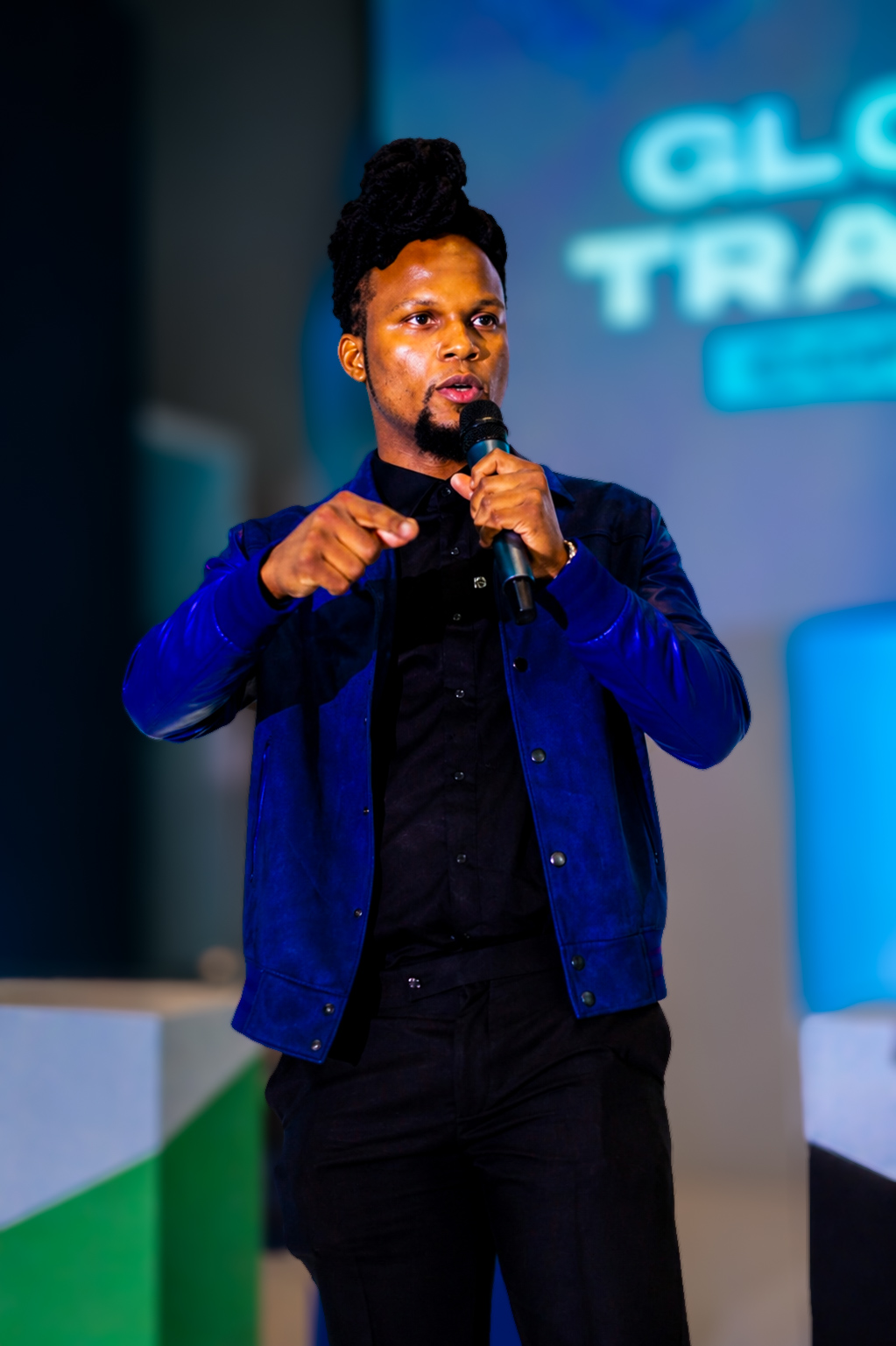
Chavez N. Allen
15+ Years Building
No reliable digital financial infrastructure existed for everyday people in the region when Chavez was starting out.
Over 80% of transactions in the Caribbean were still cash-based, leaving millions financially invisible to the global system.
Access to investment capital, banking products, and financial education was limited to those who already had institutional relationships.
Chavez saw this not as a ceiling but as the single largest opportunity in the region. Where others saw exclusion, he saw the blueprint for infrastructure.

Chapter Two

The Struggle Was Not
the End of the Story.

Before there was a $100M+ USD ecosystem, there was a young man in Jamaica trying to fund his education by selling products. There were no investors. No mentor handing over knowledge. No shortcuts. What there was, was a relentless understanding that if the world was not going to hand him opportunity, he was going to build it himself. That clarity, forged under real economic pressure, became his greatest competitive advantage.

01

No Reliable Infrastructure

Intermittent electricity. Unstable internet. The basic tools that most people in developed markets take for granted were unreliable at best and unavailable at worst. Building anything digital in this environment required a level of discipline and adaptability that most never develop.

80%
of transactions in the region still cash-based
02

A System Built Against Him

Banks required proof of address, job letters, and years of transaction history. Formal businesses required capital to start, and capital required formal business history. It was a closed loop designed to keep people out. The institutions that were supposed to support economic participation were the very barriers preventing it.

Billions
of people financially responsible but credit invisible
03

No Blueprint to Follow

In Jamaica, day trading and digital finance were not just unconventional. They were taboo. The idea of building a technology company that powered financial institutions was beyond what most people in the region could conceptualize, let alone attempt. Chavez had no roadmap. He had to build the map as he walked the territory.

Zero
regional precedent for what he was building

The struggle was not a chapter that ended when success began. It was the foundation that success was built on. Every limitation Chavez encountered became a data point. Every closed door became a product idea. Every gap in the system became the blueprint for what he would eventually build to fill it.

"Every dollar must become a worker. Every system must sustain itself. Every business must fund the next one."

The philosophy that built an ecosystem from zero

Chapter Three

The Markets Became
His First School.

Trading was not the destination. It was the engine. And the engine had to be built under conditions most traders would have used as an excuse to stop.

While others were waiting for the right conditions, the right tools, the right connections, Chavez was in the markets. Not with institutional backing or a Bloomberg terminal, but with pattern recognition sharpened by necessity and discipline forged by circumstance. He studied price behavior the way a chess player studies the board. Not reacting to moves already made but anticipating the next three.

The key decision that separated Chavez from most traders was a philosophical one: trading profits would never become lifestyle spending. Every dollar extracted from the markets was immediately redeployed into something that generated independent, recurring income. A business. A system. A layer of infrastructure. The goal was never to trade forever. The goal was to use trading as the capital engine that funded a larger architecture.

"Trading was never the goal. It was the vehicle. Every profit was a brick. Every brick became infrastructure. The building was always the point."

He pioneered remote day trading models in the Caribbean at a time when the concept was barely understood in the region. This allowed individuals to generate income independently from anywhere, without needing an office, a formal employer, or institutional permission. That model, built under extreme conditions, became the template for a broader movement.

◆ ◆ ◆

The capital from trading funded the first businesses. Revenue from those businesses funded the next layer. Each entity was made self-sustaining before the next was launched. The ecosystem did not grow through external investment. It grew through the compounding of disciplined execution over time.

Trading Discipline Framework
Pattern Recognition
95%
Risk Management
98%
Capital Deployment
100%
Emotional Discipline
92%
Profit Reinvestment
100%
See the Pattern

Identify what others miss before the market confirms it.

Protect the Capital

Never lose what took discipline to build. Risk management first.

Deploy the Profit

Every dollar earned becomes a worker in the next system.

Compound the Result

Let each layer fund the next. Patience is the real strategy.

Chapter Four

Then Came the Building.
One Brick at a Time.

Capital in hand for the first time, Chavez faced the same decision that separates builders from earners: spend it or deploy it. He deployed it. Not recklessly. Not impatiently. With the same precision he had applied to the markets. Every venture was designed to solve a real problem, generate real revenue, and fund the next step in a larger architecture that only he could fully see at the time.

The Foundation
Selling Products to Fund an Education

Long before trading, before technology, before any of it, there was a young man in Jamaica doing whatever it took to keep moving forward. Selling products. Building micro-income streams. Learning the most important lesson in business at the earliest possible age: if you want something, you have to create the conditions for it yourself. No one is coming to hand it to you.

"Every person I sold to taught me something about value. About what people actually want to pay for. That education was more valuable than any classroom."
The Pivot
From Trader to Architect

The moment the shift happened was when Chavez stopped thinking about trading as income and started thinking about it as infrastructure funding. He had proven he could extract consistent profit from volatile markets. The question became: what do I build with this? The answer was systematic, deliberate, and bigger than anything anyone in his immediate environment could have anticipated.

Trading profits became the seed capital for an entire ecosystem of ventures, each designed to generate recurring, compounding revenue without external dependency.
2018
Billionaire Holdings: The Command Center

The parent architecture was established not as a single company but as a strategic framework for managing multiple ventures from one command center. Structured the way Amazon operates across AWS, Prime, and its broader portfolio. Billionaire Holdings would sit at the center, deploying unified capital, governance, and direction across every entity beneath it. From day one, the structure was designed for scale, not survival.

Zero external investors. Zero co-founders. Zero committees. One architect deploying his own capital into his own vision.
2019 Onwards
Zippy Technologies and the Infrastructure Layer

The Caribbean's financial institutions had a problem they did not fully understand yet: they lacked the behavioral data, fraud protection, and trust infrastructure needed to serve a digital economy. Chavez built the solution before most institutions had diagnosed the problem. Zippy Technologies became the silent layer that financial institutions, payment ecosystems, and businesses across the region began to depend on.

Not a replacement for banks. The layer that protects, verifies, and connects them. Over $1B+ USD in transaction volume protected across white-label deployments.
Parallel Ventures
Building the Knowledge and Access Layer

Alongside the infrastructure work, Chavez launched Billionaires Academy to address a parallel gap: the Caribbean's most talented people had the drive and the intelligence but not the financial education, the trading knowledge, or the entrepreneurial framework to convert those qualities into sustainable income. The Academy became the Caribbean's leading financial education platform, graduating over 20,000 students across 30+ countries.

Education was not charity. It was infrastructure. Educated people become operators. Operators build economies.

Chapter Five

He Saw What the Region
Was Missing.

The more Chavez built, the clearer the picture became. The Caribbean, Latin America, and Polynesia were not struggling because their people lacked talent or ambition. They were struggling because the foundational infrastructure required to participate in the global digital economy simply did not exist. While the developed world was building on top of decades of financial architecture, these regions were still trying to lay the first brick.

What he observed was not one problem. It was a system of interconnected failures that reinforced each other. Cash economies that left no digital trail, meaning people who handled money responsibly every day had no financial identity that institutions could recognize. Fraud systems that were years behind the sophistication of the attacks they were supposed to stop. Onboarding processes so complicated that businesses lost clients before they ever completed them. Manual payroll systems in a world that had already moved to digital.

Cash-Based Economies

80% of transactions still physical cash. No digital trail. No financial identity. No pathway into the formal economy for millions of responsible people.

Fraud Epidemic

Legacy rule-based systems flagging transactions after damage is done. Over 42% of digital businesses experiencing active fraud exposure globally.

Credit Invisibility

Billions of financially responsible people locked out of credit and financial services because the system was never built to see them.

Broken Business Infrastructure

Manual payroll, 10+ step onboarding, no cross-border payment solutions for SMEs. The tools that basic business requires simply did not exist at an accessible level.

The Solutions He Built

  • Full-suite KYC in 3 steps or fewer, converting cash-based individuals into verified, compliant digital participants
  • Real-time behavioral fraud AI that neutralizes threats before they execute, not after
  • Unified financial and trust infrastructure that financial institutions can integrate without replacing their existing systems
  • Alternative credit scoring from behavioral financial data, giving voice to the credit invisible
  • Digital wallets with QR merchant acceptance, bringing digital payments to street-level merchants
  • Automated onboarding and offboarding infrastructure reducing 10+ step processes to 3 or fewer
  • Global payment rails covering card, ACH, wire, crypto, P2P, B2B, B2C, and government channels
  • Audited transaction trails providing legal and financial compliance protection for every business
"We are not building for markets that already work. We are building the infrastructure for markets the world forgot to build for."

Chapter Six

When the World Stopped.
He Did Not.

2020. A global pandemic. Governments locked down. Companies laid off workers. Supply chains broke. The global economy contracted in ways not seen in a generation. For most businesses, it was a crisis. For Chavez Allen, it was the moment that proved everything he had built was structurally sound.

The World

Most Organizations Contracted

Across industries and geographies, the pandemic exposed structural weaknesses. Companies that depended on physical presence, external capital, or centralized operations faced existential pressure.

  • Mass layoffs across industries
  • Supply chains collapsed
  • Revenue streams disappeared overnight
  • Investor funding dried up
  • Physical operations became impossible

Billionaire Holdings

The Ecosystem Expanded

Because the entire ecosystem was digital by design, self-funded by structure, and distributed by default, the pandemic did not create a crisis. It created an opportunity to serve a world that suddenly needed exactly what had already been built.

  • Hired and expanded the team digitally
  • Onboarded new clients and partners remotely
  • Enabled income generation for thousands from home
  • Digital infrastructure demand accelerated
  • Zero external funding required to sustain operations

The pandemic did not create Chavez Allen's competitive advantage. It revealed it. A decade of building self-sustaining, digital-first infrastructure meant that when the world suddenly needed exactly those things, the ecosystem was already operational and ready to scale.

Chapter Seven

The Scale of What
Was Actually Built.

A decade of compounding execution. One venture funding the next. One market opening the door to the next. One problem solved revealing the next problem worth solving. This is what the Billionaire Holdings ecosystem looks like today, measured not just in valuations but in lives impacted, institutions empowered, and economies shifted.

$1B+
USD Transaction Volume Protected
Across white-label deployments
100K+
Global Network Partners
Earning across 4 regions
20K+
Lives Educated
Across 30+ countries
$100M+
USD Portfolio Valuation
Fully bootstrapped
01
Command Center
Billionaire Holdings

The parent architecture managing all ventures, capital, and strategy from one command center. Offices in Kingston, Stamford, Miami, and Dubai.

02
Financial & Trust Infrastructure
Zippy Technologies

The silent backbone providing monitoring, protection, and verification for financial institutions across the Caribbean and beyond.

03
Innovation & Compliance
Imagine Innovation

AI-driven KYC tools, risk technology, and compliance systems now adopted as the regional standard across Caribbean banking.

04
Financial Education
Billionaires Academy

The Caribbean's leading financial education platform. 20,000+ graduates across 30+ countries equipped to build real income from anywhere.

05
Mobile Payments
MobileQR

A regional QR payment network making it easier for merchants to accept payments and individuals to transact securely on the go.

06
Registered 501(c)(3) Nonprofit
WeCare Global

Rebuilding homes and restoring communities across Jamaica. Because the most powerful infrastructure is the one that leaves no one behind.

Chapter Eight

When Governments Started
Calling for What He Had Already Built.

In April 2026, something remarkable happened. Jamaica's Prime Minister Andrew Holness issued one of the strongest national calls to date for financial transformation: Jamaica must move quickly toward a fully digital financial system, making transactions faster, cheaper, and more inclusive. He called for a unified platform that allows payment systems to exchange seamlessly across the region.

Jamaica, April 2026

"Jamaica must move quickly toward a fully digital financial system. We need a unified platform enabling interoperability across payment systems."

Prime Minister Andrew Holness, Jamaica

What the Prime Minister was describing, Chavez Allen had already built. Not as a pilot program. Not as a proposal. As deployed, operational infrastructure that financial institutions across the region were already using. The private sector had moved faster than policy. The architect had built before the blueprint was officially requested.

This is the position that defines Chavez Allen in the financial landscape of the Caribbean: not a participant waiting for institutional permission, but a builder whose work the institutions are now trying to catch up to.

19th Century
Rockefeller

Built the oil infrastructure that the industrial economy ran on. Not a participant in the system. The builder of the system.

21st Century, Caribbean
Chavez N. Allen

Building the financial and trust infrastructure layer that the digital economy of the Caribbean, Latin America, and beyond will run on.

21st Century, Global
Stripe

Built the payment infrastructure that the global internet economy runs on. Not a bank. The layer banks and businesses depend on.

"In global markets, Rockefeller built oil infrastructure. Stripe built payment infrastructure. In the Caribbean, Chavez N. Allen is positioning himself at that same structural layer: not as a participant in the system, but as a builder of the system itself."

Billionaire Holdings Press Release, 2026

Chapter Nine

The Success Was Never
Just for Himself.

From the beginning, Chavez understood something that many high-achievers learn too late: the most powerful measure of success is not what you accumulate for yourself. It is what you make possible for others. Born in Jamaica, he has never lost sight of where he came from or who the infrastructure he builds is ultimately supposed to serve.

WeCare Global, a registered 501(c)(3) nonprofit, was not an afterthought. It was an expression of a philosophy that has been present since day one: that financial infrastructure and community empowerment are not separate missions. They are the same mission expressed at different scales.

"The most powerful infrastructure I will ever build is not a payment system. It is a community where no one gets left behind."

Through Billionaires Academy, over 20,000 graduates across 30+ countries have gained access to financial education, entrepreneurial frameworks, and income pathways that simply did not exist for people in their position before. Through the distribution network, 100,000+ partners are building real incomes by distributing real solutions to real problems. Through WeCare Global, families in Jamaica are being given stable homes and restored futures.

Rebuilding Homes Across Jamaica

WeCare Global is actively providing families with safe, stable housing because communities cannot grow without foundations to stand on.

Democratizing Financial Knowledge

Billionaires Academy equipping individuals with life skills, financial intelligence, ecommerce knowledge, mindset, and confidence to start from nothing and build something real.

Creating Income Pathways

The 100,000+ person distribution network gives anyone willing to work a structured pathway to earn $100,000+ USD per year distributing solutions they believe in.

Building the Next Generation

Not just building businesses. Building the next generation of Caribbean financial leaders, operators, and architects who will take the region further than any single person could alone.

Reviving Communities

WeCare Global is active across Jamaica, restoring infrastructure, supporting families in need, and building the social foundation that economic growth depends on.

Chapter Ten

The Story Is Not Over.
The Biggest Chapter Is Next.

Everything built so far, the ventures, the infrastructure, the network, the impact, has been the foundation. The architect does not build foundations to stop at foundations. The Caribbean was the proof of concept. The United States is the active deployment. Latin America is the next frontier. Dubai is the global intersection. Polynesia is the next underserved market waiting for what has already been built to serve it.

01

A Unified Financial and Trust Layer

A single architecture connecting institutions globally, enabling seamless movement of capital across borders, reducing friction in identity, payments, and compliance. Not for a region. For the world.

02

A Movement of 100,000+ Builders

Every person who enters the ecosystem becomes a participant in a global distribution network. Every product they distribute creates income for them and strengthens the infrastructure for everyone. The network that builds itself.

03

Fraud Protection at Global Scale

Extending the behavioral fraud AI and trust signal infrastructure to protect transactions across every market the ecosystem enters. Because 42%+ of businesses experiencing fraud is not an acceptable statistic. It is a problem with a solution.

04

A Legacy That Outlasts the Builder

The infrastructure being built today is designed to serve the next generation, not just the current one. Through WeCare Global, Billionaires Academy, and the broader ecosystem, the work is about leaving something behind that matters.

Jamaican-Born. Globally Operating. Architecturally Focused.

The Architect.
The Standard.

This is not the end of the story. It is the end of the beginning.

Connect With Chavez Read the Full About Join the Network